Understanding Your Habits
Why the behaviours you struggle with make sense
Most habits we label as “bad” aren’t personal failures.
They’re coping strategies — ways of meeting real underlying needs like comfort, relief, rest, control, or emotional regulation.
That’s why willpower rarely solves them.
When you only focus on stopping a behaviour, you can miss what it’s doing for you — and the habit tends to return when life gets busy, stressful, or overwhelming.
If you're new here, you might like to start with How I Coach.
This page explores a different way of looking at habits:
Understanding the role your habits play, without judgement or shame — so change becomes more realistic, supportive, and sustainable.
Because lasting change doesn’t begin with trying harder.
It begins with awareness.
A behaviour-first lens (in plain language)
When you understand a habit, you start to see three things more clearly:
- What triggers it (the moment, feeling, or situation that sets it off)
- What need it meets (comfort, relief, stimulation, connection, control, or rest)
- What keeps it going (patterns, environment, stress, fatigue, identity, routines)
Common habits people want help with
Below are some of the most common patterns people struggle with.
Not because people are weak — but because these habits often make sense when viewed in context.
Emotional eating
Often less about food — and more about comfort, relief, stress, or depletion.
Phone scrolling
Sometimes “mindless” on the surface, but often driven by stimulation needs, avoidance, or overload.
Procrastination
Not laziness — often a protective behaviour that reduces discomfort, uncertainty, or fear of getting it wrong.
Alcohol use
For many people it’s not about excess — it’s about switching off and finding relief when rest feels hard to access.
Smoking / vaping
Often serves as regulation, relief, pause, or a moment of control in a demanding day.
Many people assume behaviour is simply a matter of willpower or motivation.
In reality, behaviour is often influenced by a combination of factors including our beliefs, identity, environment, habits, stress levels, emotional state, and current life circumstances.
Understanding these influences can provide valuable insight into why certain behaviours persist and where meaningful change is most likely to begin.
If this resonates
If you’ve ever felt like you “know what to do” but can’t get it to stick, you’re not alone.
Most people don’t fail at change — their plan fails when it doesn’t account for real life.
Want to explore how these ideas apply to your own situation?
The Behaviour Clarity Session is a one-off coaching conversation designed to help you better understand what's getting in the way, and the habits, behaviours, and influences contributing to it.
Learn More About The Behaviour Clarity Session
Change doesn’t need more pressure. It needs better support.
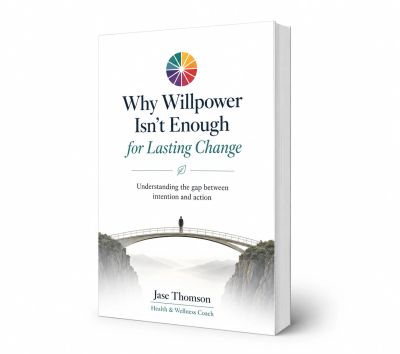
Free ebook
If you’d like a quiet starting point, I’ve created a short ebook that explores why change is hard — and what helps.
This website uses cookies.
We use cookies to analyze website traffic and optimize your website experience. By accepting our use of cookies, your data will be aggregated with all other user data.